Why Your Pool Turns Green (And Why Chemicals Alone Won’t Save It)
- Keith Hargrove
- Oct 3, 2025
- 3 min read

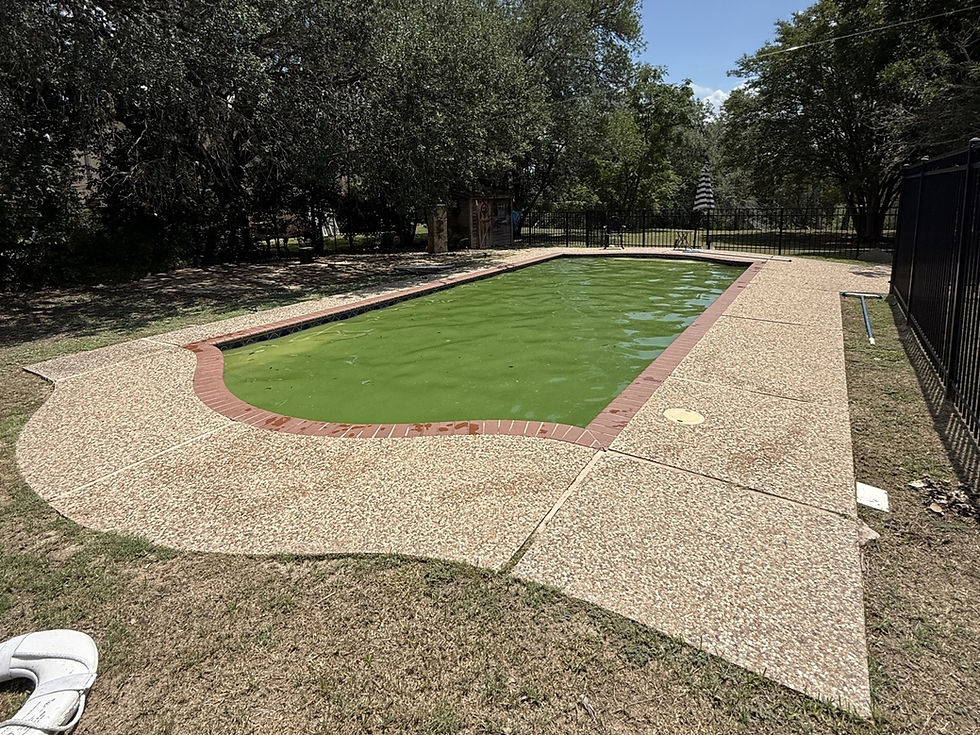
You walk out back, ready for a swim, and boom — instead of a crystal-blue oasis, you’ve got a backyard swamp. The kids won’t go near it, the dog looks suspicious, and you’re standing there thinking, “Did Shrek move in overnight?”
It happens all the time, and the first instinct is always the same:👉 Run to the pool store.👉 Drop hundreds of dollars on buckets of shock, algaecide, and who-knows-what.👉 Dump it all in and cross your fingers.
And here’s the kicker: most of the time, the pool still looks like pea soup.
The Truth About Green Pools
A green pool isn’t just about “not enough chlorine.” Sure, chemicals matter — but they’re only half the story. The other half is your equipment.
Think of it like this:
Chemicals are the soap.
Your pump and filter are the washing machine.
Without the washing machine running, you’re just standing there with a bucket of soapy clothes. It doesn’t do much.
Why Pool Stores Can Only Do So Much
Here’s something most pool owners don’t realize: the folks at your local pool store aren’t trying to rip you off. They’re doing their job. You bring them a water sample, and they give you solutions based on that sample. That’s their view of the pool — just the water chemistry.
But here’s the problem: they can’t see your dirty filter, your weak pump, or the dead zone in the corner of your pool where water never circulates. In other words, they’re only seeing half the picture.
So you walk out with bottles, bags, and buckets of chemicals… but if your equipment isn’t moving and cleaning the water properly, all those chemicals can only do so much.
The Hidden Culprit: An Aging Pool Surface
Here’s the part nobody likes to hear: sometimes it’s not your chemicals or equipment at all — it’s your pool surface.
Older concrete or plaster pools can get rough, pitted, or etched over time. Those tiny grooves are like condos for algae. Once it takes hold, it’s nearly impossible to brush it all out, even with perfect circulation and balanced water.
If your pool surface is worn down, algae will always have the upper hand. You’ll feel like you’re fighting a losing battle, and in some cases, the only real solution is resurfacing.
What Actually Works
The magic formula isn’t just chemicals, and it isn’t just equipment. It’s both — plus a healthy surface.
Strong circulation keeps water moving.
Clean filters catch all the junk.
Balanced water chemistry keeps algae from coming back.
A smooth, healthy pool surface gives algae nowhere to hide.
When all four work together? That swamp clears up faster than you’d believe.
A Pro Tip From the Field
I can’t tell you how many times I’ve met homeowners who said, “I’ve already spent $300 on chemicals and it still looks the same.” Once we cleaned their filters or fixed a pump, the pool went from green to clear in days. But when the surface is too far gone? Resurfacing was the only way to stop the algae from returning.
Bottom Line
Your pool supply store isn’t wrong — they just don’t see the whole picture. Think of them as the doctor who looks at your bloodwork, while we’re the ones who check your heartbeat and look at your skin. Both sides matter.
👉 If your pool’s green and nothing seems to work, don’t just keep pouring money into chemicals. Let Legacy Pool & Spa look at the whole system — water, equipment, and surface — so you can get back to swimming instead of stressing.
Comments